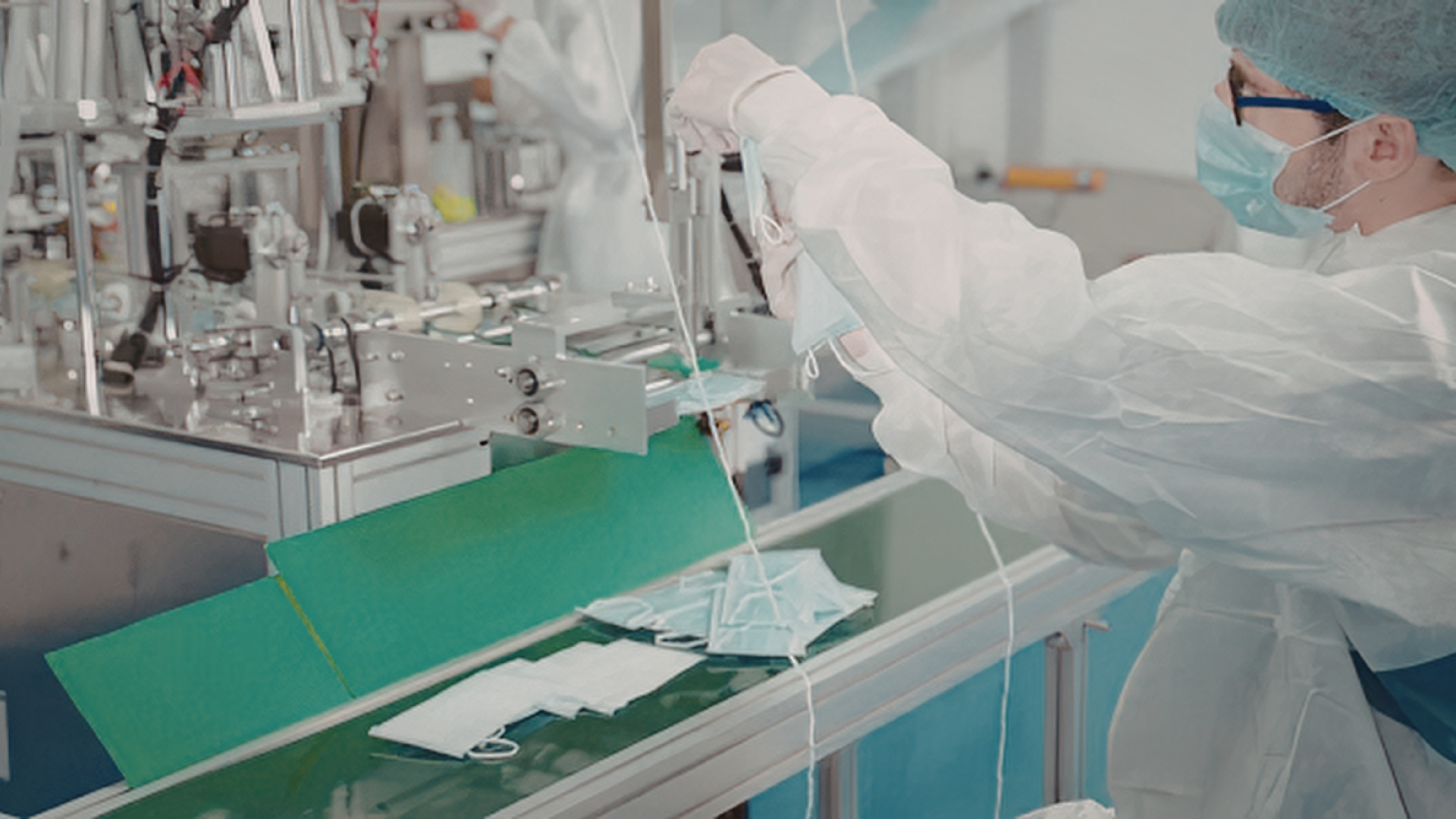
In semiconductor manufacturing, cleanroom efficiency depends on more than airflow systems and contamination protocols. The workstation itself plays a major role in supporting productivity, organization, and process reliability. Poorly designed workstations can create workflow bottlenecks, increase contamination risk, and make routine tasks more difficult for operators.
As semiconductor processes continue to evolve, manufacturers are investing in semiconductor cleanroom workstations that support precision, flexibility, and contamination control. The right workstation features can help create cleaner, more efficient environments without disrupting daily operations.
Here are five workstation features that can significantly improve semiconductor cleanroom efficiency.
1. Cleanroom-Compatible Materials and Finishes
Material selection is one of the most important considerations for semiconductor cleanroom workstations. Surfaces must withstand frequent cleaning while minimizing particle generation and contamination risks.
Common cleanroom-friendly materials include stainless steel, powder-coated steel, and non-porous laminate surfaces. Smooth finishes are especially important because they reduce areas where particles and contaminants can accumulate.
Workstations designed specifically for cleanroom environments also avoid exposed hardware, difficult-to-clean joints, and unnecessary surface textures. These details help support consistent cleaning procedures and long-term durability.
For semiconductor manufacturers, selecting the right materials can improve both compliance and operational reliability.
2. Adjustable Ergonomics for Precision Work
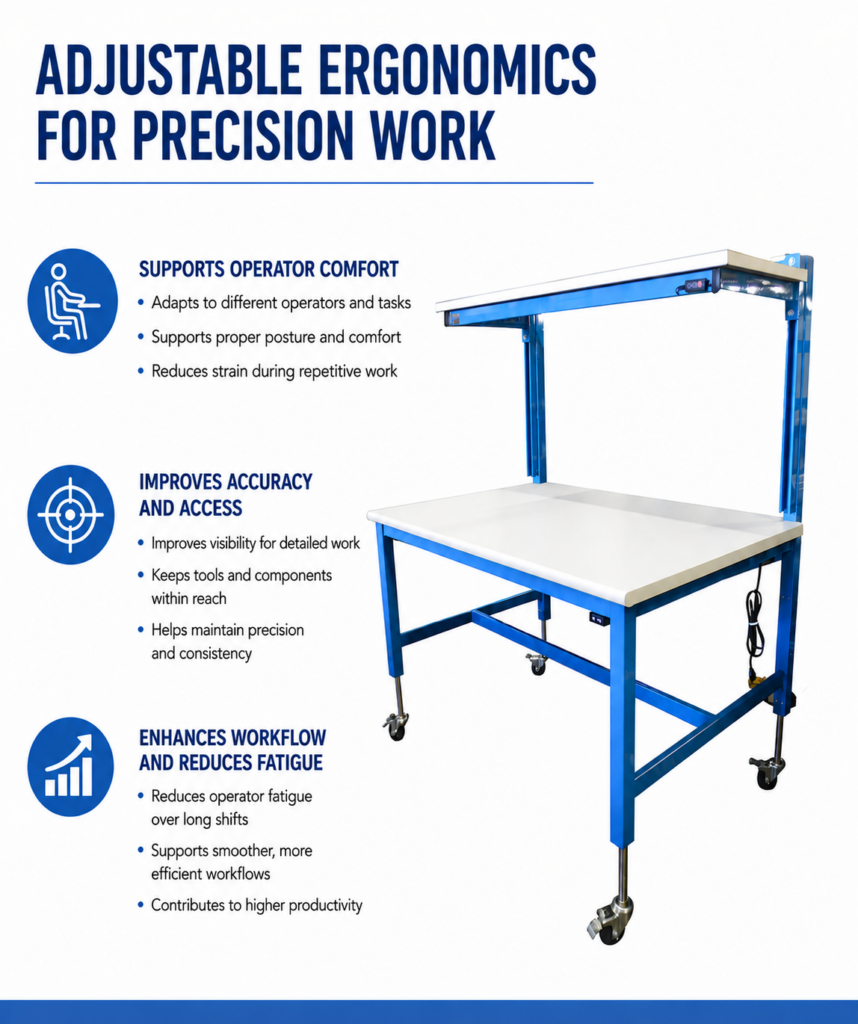
Many semiconductor assembly and inspection tasks require repetitive, detail-oriented work over long periods of time. Operator comfort directly impacts consistency, accuracy, and productivity.
Height-adjustable workstations, monitor arms, footrests, and adaptable shelving help create ergonomic setups that support different users and applications. Proper positioning reduces strain while improving visibility and access to tools and components.
In high-precision environments, even small ergonomic improvements can contribute to better workflow efficiency and reduced operator fatigue.
3. Modular Storage and Configurable Accessories
Semiconductor manufacturing environments change quickly. New tools, updated processes, and evolving production requirements can make fixed workstations difficult to maintain over time.
Modular workstation systems allow manufacturers to adjust shelving, storage, lighting, and accessory configurations as operational needs evolve. This flexibility supports continuous improvement without requiring complete workstation replacements.
Configurable storage also helps operators keep frequently used tools and materials within easy reach, reducing unnecessary movement and improving task efficiency.
4. Mobility and Scalable Layout Options
As facilities grow or production lines shift, workstation mobility becomes increasingly valuable. Mobile workstations and modular layouts give semiconductor manufacturers the ability to reconfigure workspaces without major infrastructure changes.
This flexibility is especially useful for pilot production areas, testing environments, and high-mix manufacturing operations where layouts may change frequently.
Scalable workstation systems also support future expansion, allowing facilities to maintain consistency across multiple production areas while adapting to evolving operational demands.
Building Efficient Semiconductor Cleanroom Workstations Around Real Manufacturing Needs
No two semiconductor facilities operate exactly the same way. Workstation requirements often vary based on process flow, cleanroom classification, equipment integration, and operator needs.
Custom semiconductor cleanroom workstations help manufacturers create environments that support both cleanliness and efficiency while aligning with long-term production goals. By focusing on flexibility, ergonomics, and cleanroom compatibility, semiconductor manufacturers can build workspaces that support reliable performance today and adapt to future demands tomorrow.
Need Help Optimizing Your Semiconductor Workspaces?
Whether you are building a new cleanroom, upgrading production areas, or improving operator efficiency, the right workstation design can make a measurable difference. Bench-Tek works with semiconductor manufacturers to develop custom workstation solutions that align with process requirements, cleanroom standards, and long-term operational goals.
From modular configurations to integrated utilities and ergonomic layouts, our team helps create semiconductor cleanroom workstations designed around the way your facility operates.
Contact Bench-Tek to discuss your application and explore customized workstation solutions for your semiconductor environment.
Key Takeaways
- Cleanroom-compatible materials help reduce contamination risks.
- Integrated cable management improves organization and safety.
- Ergonomic workstation features support operator comfort and accuracy.
- Modular designs allow workstations to adapt to changing production needs.
- Mobile and scalable workstation systems improve facility flexibility.
- Custom semiconductor cleanroom workstations help manufacturers optimize efficiency.