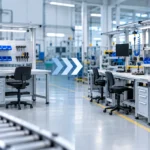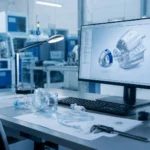

In semiconductor manufacturing, precision is everything. Every process, from wafer handling and inspection to assembly and testing, is carefully engineered to maximize quality, consistency, and efficiency. Yet one important component is often overlooked: the workstation.
While standard workstations may seem like a convenient solution, they rarely meet the unique demands of semiconductor manufacturing. Every production environment has its own equipment, workflows, operator needs, and cleanroom requirements. A workstation that works well for one application may create unnecessary obstacles in another.
That is why many semiconductor manufacturers are moving toward customized, modular workstation solutions that are designed around the process instead of forcing the process to fit the furniture.
Every Semiconductor Process Has Different Requirements
Unlike many manufacturing industries, semiconductor production includes a wide range of specialized tasks. Inspection stations, testing areas, assembly cells, packaging operations, and quality control labs all have different equipment, tools, and workflows.
For example:
- A wafer inspection station may require optimized lighting, monitor placement, and ergonomic positioning for microscope work.
- An assembly workstation may need integrated shelving, ESD-safe work surfaces, and organized storage for precision tools.
- A testing station may require dedicated space for instruments, cable management, and power distribution.
- A cleanroom workstation may need materials and accessories that support contamination control while maintaining operator efficiency.
Trying to use the same workstation configuration across every application often leads to compromises that reduce productivity and make daily tasks more difficult.
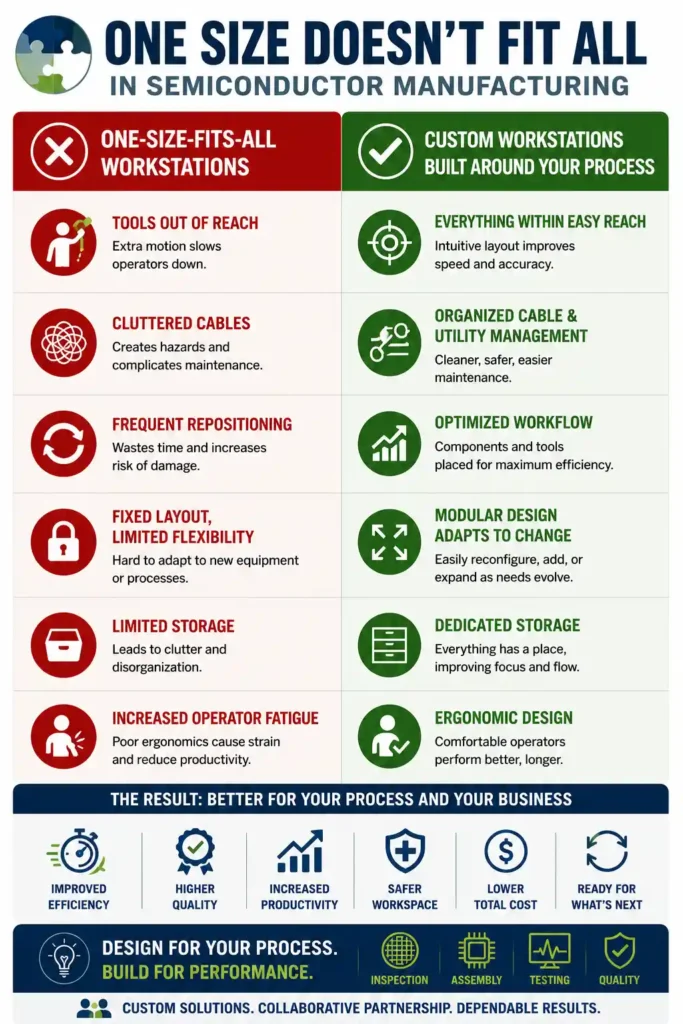
Standard Workstations Can Create Hidden Inefficiencies
A workstation that is not designed for its intended process can introduce small inefficiencies that add up over time.
Operators may need to:
- Reach farther for frequently used tools.
- Navigate cluttered cables or equipment.
- Constantly reposition components.
- Work in uncomfortable postures during repetitive tasks.
- Share limited storage space with nearby stations.
Individually, these issues may seem minor. Across multiple shifts and production lines, however, they can contribute to reduced efficiency, operator fatigue, and inconsistent workflows.
Thoughtful workstation design helps eliminate unnecessary movement so operators can stay focused on the task at hand.
Equipment Integration Matters
Modern semiconductor workstations often support much more than a flat work surface.
Many applications require integration with:
- Test equipment
- Monitors and display arms
- Power outlets and utility connections
- Compressed air or specialty gas connections
- Barcode scanners
- Shelving and storage
- Documentation holders
- Cable management systems
A standard workstation may require aftermarket modifications to accommodate this equipment, resulting in cluttered layouts or difficult maintenance.
A customized workstation is designed with these requirements in mind from the beginning, creating a cleaner, more organized workspace.
Ergonomics Supports Performance
Semiconductor manufacturing often involves repetitive, detail-oriented work that requires operators to remain focused for extended periods.
Poor workstation ergonomics can lead to unnecessary strain, especially when operators frequently reach, bend, or work at fixed heights.
Features such as adjustable work surfaces, monitor arms, footrests, task lighting, and properly positioned storage help create a more comfortable environment. When operators can work comfortably, they are better positioned to maintain consistency and accuracy throughout their shift.
Flexibility Is Essential
Semiconductor manufacturing continues to evolve as new products, equipment, and production methods are introduced.
A fixed workstation that meets today’s requirements may become outdated as processes change.
Modular workstation systems offer greater flexibility by allowing manufacturers to:
- Reconfigure shelving and accessories.
- Add or remove storage.
- Integrate new equipment.
- Adjust workstation layouts.
- Expand production areas without replacing entire workstations.
This adaptability helps facilities respond to changing production demands while protecting their investment over the long term.
Customization Does Not Mean Complexity
Some manufacturers assume that a custom workstation requires a lengthy or complicated design process.
In reality, customization begins with understanding how the workstation will be used.
Key considerations include:
- The manufacturing process being performed.
- Equipment dimensions and placement.
- Utility requirements.
- Operator workflow.
- Cleanroom and ESD requirements.
- Future expansion plans.
With these details defined early, manufacturers can develop workstation solutions that fit their operations without adding unnecessary complexity.
The Right Workstation Supports the Entire Process
In semiconductor manufacturing, even small improvements in workflow can have a meaningful impact over time.
A workstation designed around the specific process helps organize equipment, improve operator comfort, reduce unnecessary motion, and adapt as production needs evolve.
Rather than asking employees to adjust to a standard workstation, manufacturers can benefit from workstations designed to support the way they already work.
At Bench-Tek Manufacturing, we collaborate with customers to develop modular workstation solutions tailored to their applications, equipment, and production goals. Whether supporting semiconductor assembly, testing, inspection, or cleanroom operations, our focus is on creating workstations that fit the process, not the other way around.
Key Takeaways
- Semiconductor manufacturing involves diverse processes that require workstation configurations tailored to specific tasks.
- Standard, one-size-fits-all workstations can create workflow inefficiencies, increase operator fatigue, and limit productivity.
- Custom workstations support better equipment integration, resulting in cleaner layouts and easier access to essential tools.
- Ergonomic features help improve operator comfort, consistency, and long-term performance during repetitive tasks.
- Modular workstation systems provide the flexibility to adapt to new equipment, changing production requirements, and future expansion.
- A process-driven workstation design can improve efficiency while supporting quality, organization, and operational goals.